
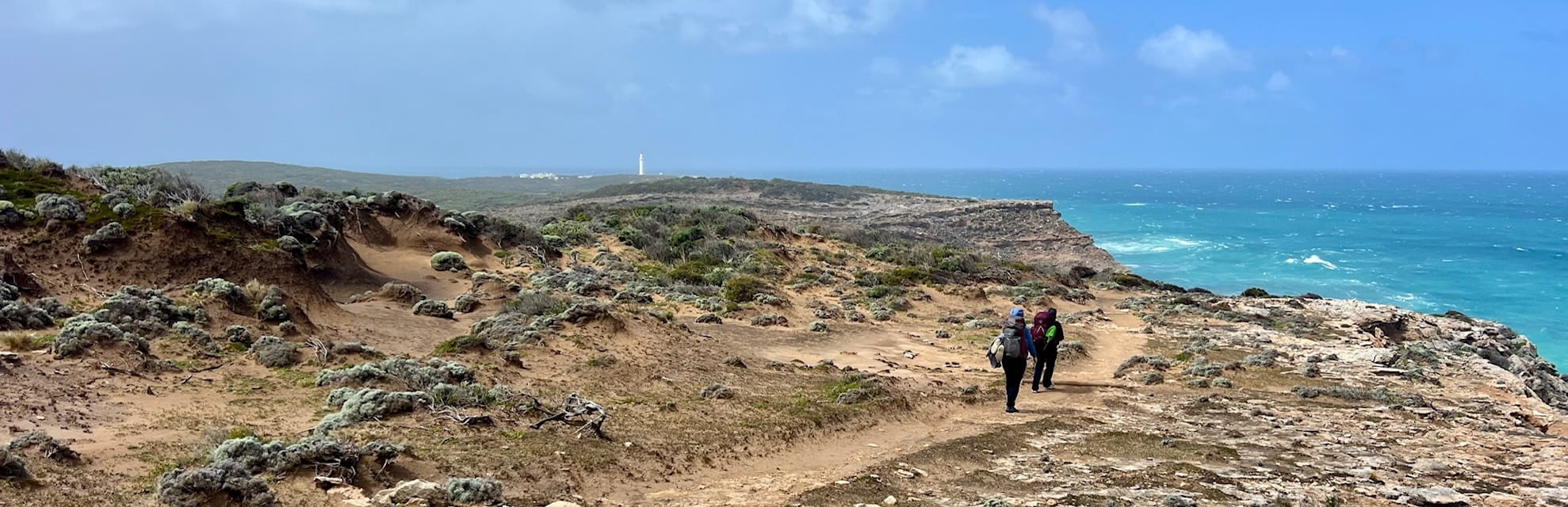
I was keen to hike the GSWW because I wanted to experience the freedom of a longer hike. New to pack hiking in 2025, I had previously only completed the Great Ocean Walk and a few weekenders, so the idea of staying in my tent, carrying everything I needed, for two weeks was appealing.
What I hadn’t anticipated was the challenge of constant wet boots.
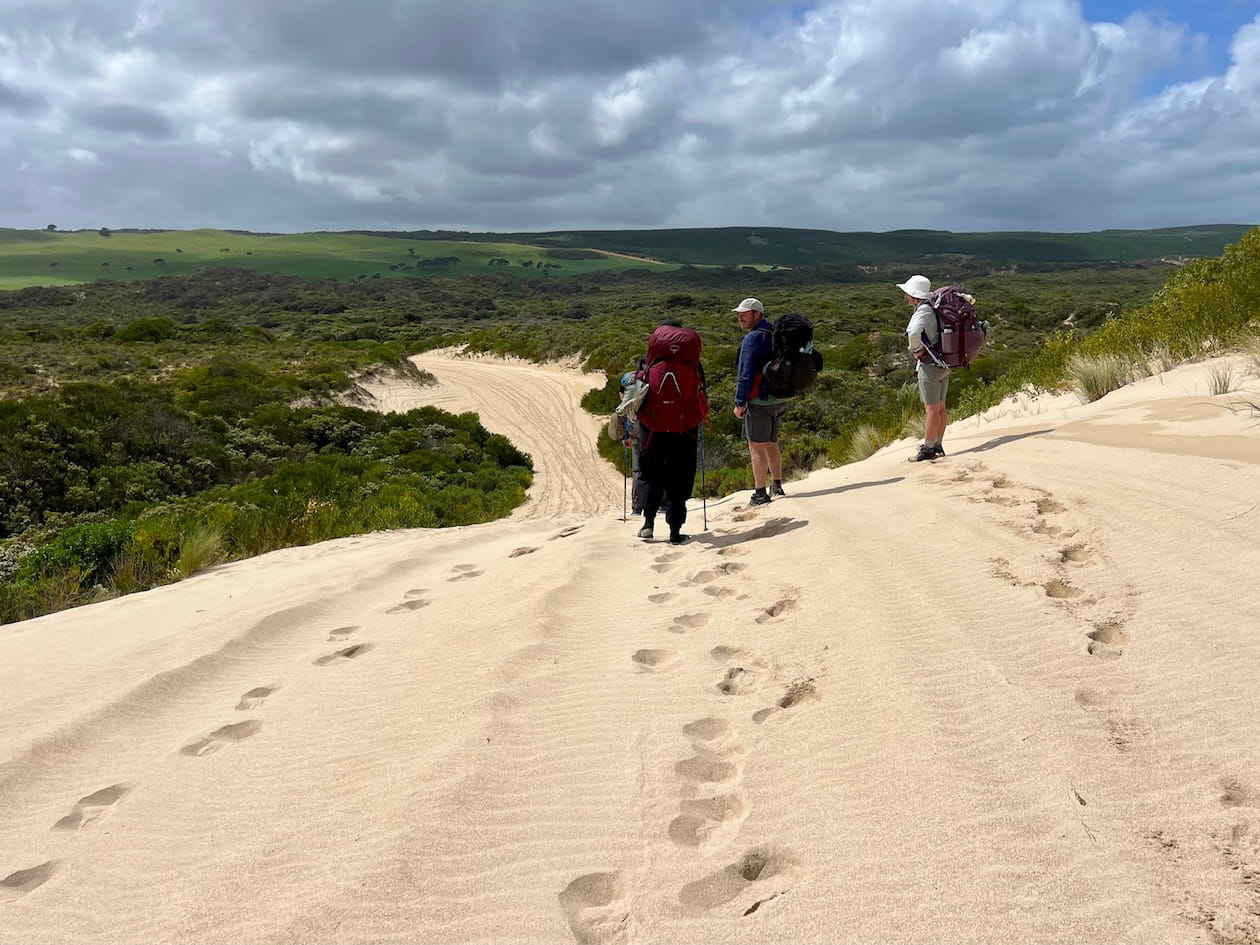
Our walk started at Nelson and I immediately loved how remote the long stretches of beach felt. The abundance of marine debris provided interest as we walked; weathered bottles, nautical ropes, even an entire shipping container! The waves rush up the beach, making it hard to decide whether to walk on the firmer sand close to the water’s edge (and risk wet boots) or stay high where every step sank in soft sand. And with high tide falling near the middle of each day, we regularly had to run the gauntlet between waves and sand cliffs, again trying (mostly unsuccessfully) to stay dry.
Behind the beaches, the coastal dune system was extensive, providing a backdrop for some amazing photos and some fun sliding down the dunes.
On day four we hit the rugged clifftops, where onshore winds tried their best to topple us, but where we also had spectacular views along the coastline. Spirits were lifted when we learned that the walk took us directly past the Bridgewater Bay fish and chip shop, but then the next day there was much disappointment when we discovered that the much-anticipated Cape Nelson Lighthouse café was closed for renovations!
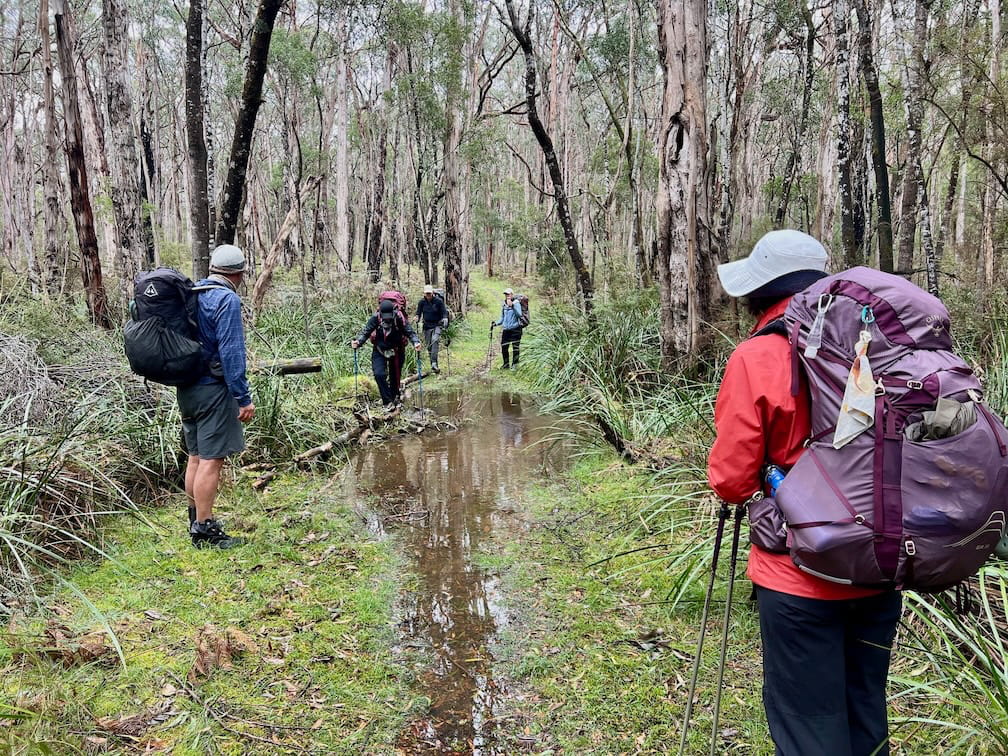
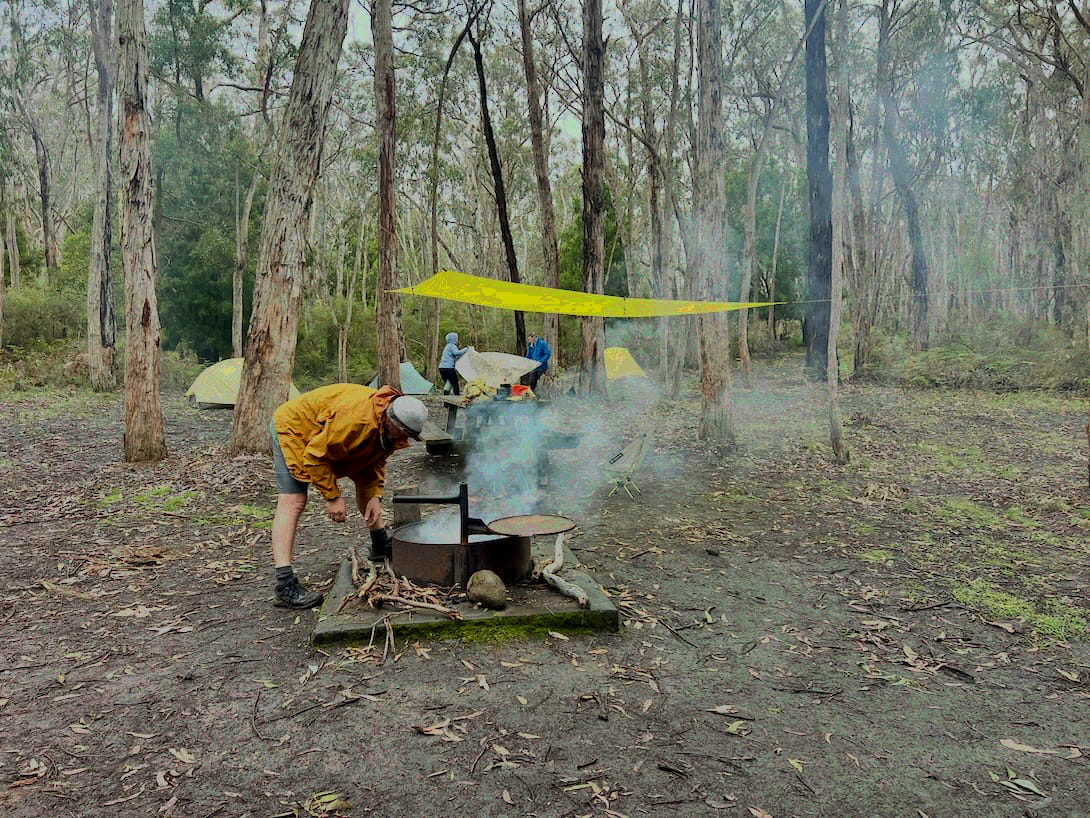
An overnight stop in Portland gave us a chance to recharge and resupply before spending the next four days walking amongst stringybark trees* in the Cobboboonee National Park. Once again, we were trying to keep our feet dry with parts of the trail waterlogged, but it was lovely to finally be out of the wind. The massive mushrooms in this peaceful forest were a source of wonder.
After 10 days, with my feet feeling every step of the 200km we’d walked, I was happy to trade my boots for a canoe and paddle. The Glenelg River is pristine and picturesque, and I particularly loved the simplicity of the timber jetties and colourful shacks that we passed on our journey. Three days on the Glenelg River brought us back to Nelson where we began. At the Nelson Hotel that night, I overheard interstate hikers saying that the Great South West Walk was highly underrated. I feel so fortunate that we were able to enjoy this impressive hike without the crowds. It was an amazing escape.
Quick Facts About The Great South West Walk
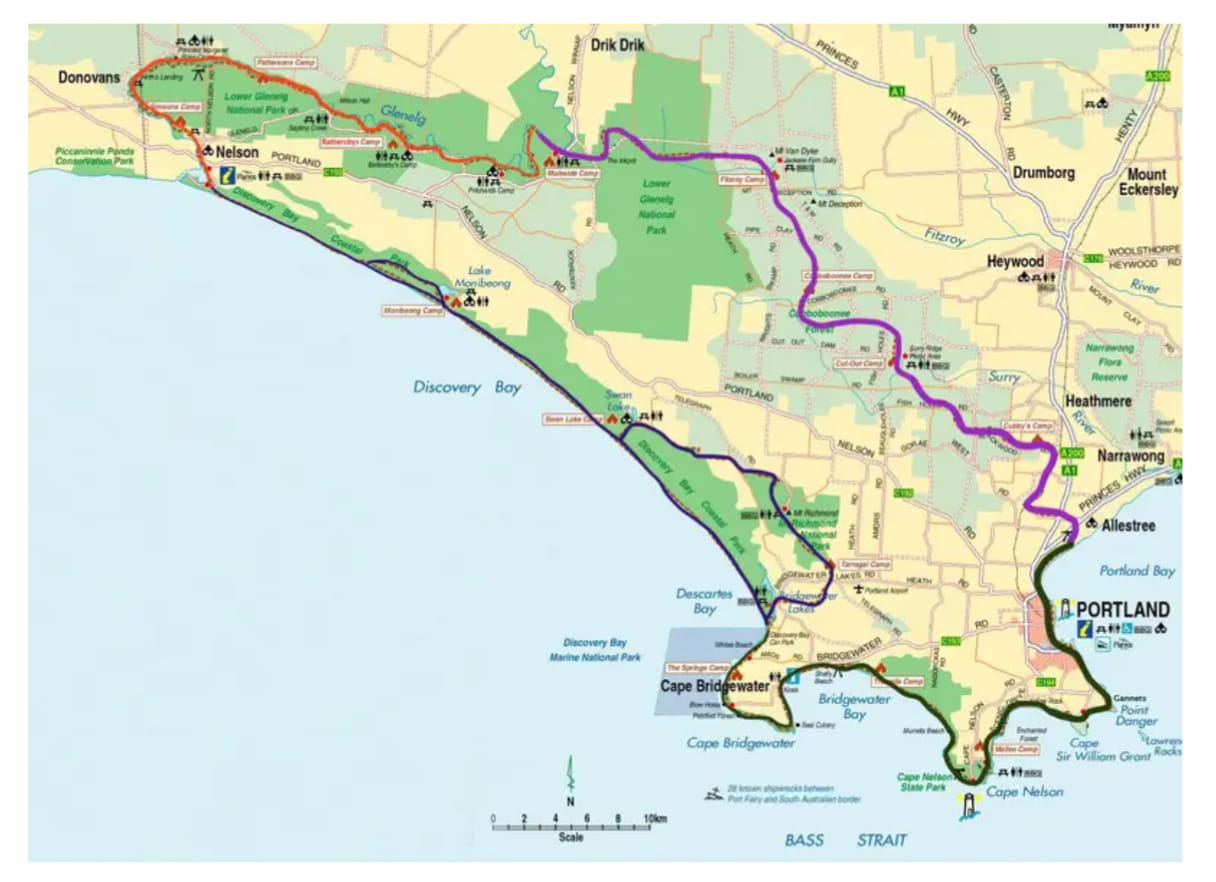
The Great South West Walk (GSWW) is a 262km trail on Gunditjmara country from Portland through the Cobboboonee Forest, along the Glenelg River, through Nelson and down the beach of Discovery Bay finishing by returning to Portland via the Cape Nelson Cliffs. These four distinct landscapes are referred to as the four symphonies – which is extremely fitting.
What also makes this walk unique is that the first 200km was developed by Portland High School staff, students and their families between 1980-82. In 1983 the Friends of the GSWW was formed and the trail expanded to its current 262kms.
We started in Nelson in early October walking clockwise to Portland via Discover Bay and the Nelson Cliffs. After one very comfortable night in Portland we walked through the Cobboboonee Forest to Moleside where we paddled the last symphony back to Nelson. (written by Anna van den Broek)
- A 262km Easy/Medium walk in the South West corner of Victoria on Gunditjmara country.
- A 15/16 day loop trail anticlockwise from Portland through the Cobboboonee Forest and the Lower Glenelg National Park to Nelson. From Nelson the trail continues on the beach of Discovery Bay Costal Park around Capes Bridgewater and Nelson finally returning to Portland.
- Supplies available at Portland. Nelson offers accommodation, a well-stocked service station and a pub and Bridgewater has a cafe. The Cape Nelson Lighthouse may be open upon passing but don’t bank on it. The lighthouse cottages also offer boutique accommodation.
- There are 14 campsites in total with 12 sites bookable via Parks Vic. Cubbys and Tarragal campsites need to be booked via the GSWW directly. All campsites have a shelter, a drop toilet, water, a fire pit and a logbook. A maximum of 20 walkers per night per site.
- Signposted well however a gps and/or hardcopy map are highly recommended.
- Fires are permitted with restriction in place over Summer.
- Tides along Discovery Bay must to be factored in to any walk plan.
- Water is available at every campsite however care needs to be taken that adequate water is carried especially along Discovery Bay sections. All water should be treated.
- Spring and Autumn are the best times to walk.
- Wildlife is abundant between Moleside and Nelson but note foxes will take food at Trewalla (they will rip into a tent to get it!).
- An alternative is to hike to Moleside and canoe/kayak to Nelson (3 days). Contact Chris at https://nelsoncanoehire.com.au/ (exceptionally helpful as will also store supplies).
- For trail status and further details please visit https://greatsouthwestwalk.com/.
- *The stringybarks in the Cobboboonee forest are mostly Messmate (Eucalyptus obliqua), which you can read more about in our guide to identifying gum trees!
Related posts: An older trip to The Great South West Walk
Now read: Mount Jagungal Revisited
Well done Anna . One of my favourite walks as it’s at my home town . As a family we helped build the original walk its fantastic it gets so much use